OPOL or minority language at home — which fits you?
Anyone who starts reading about bilingual parenting trips over two acronyms within minutes. Both work. Both have a weak spot people rarely mention.
OPOL: one parent, one language
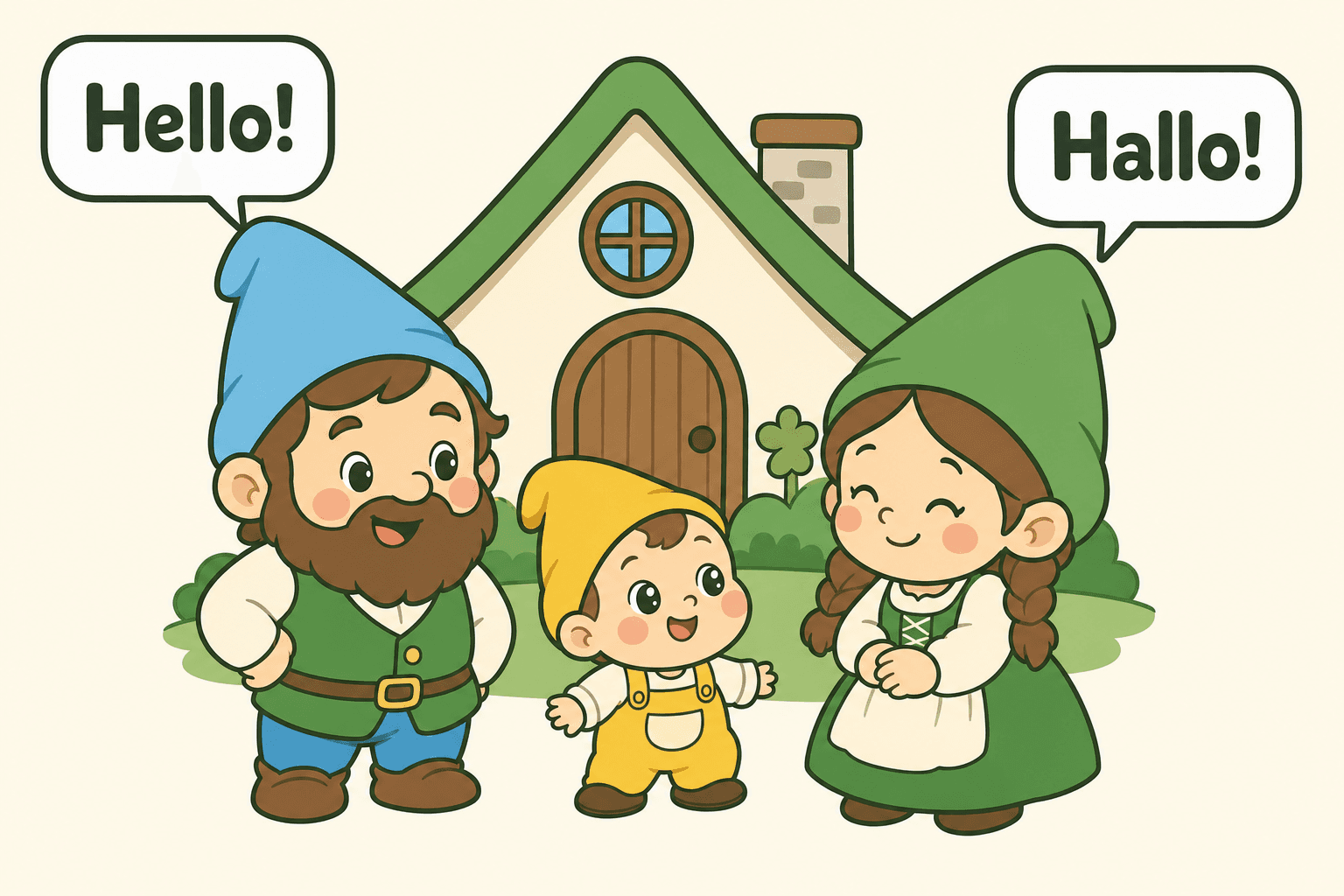
OPOL stands for One Parent, One Language. Each parent consistently speaks their own language with the child — you German, your partner English, regardless of situation.
What’s good about it: it’s clear and easy to remember. The child links language to person, which makes switching natural. And both parents speak to their child in the language they actually feel at home in — worth more than it sounds.
The weak spot: OPOL routinely collapses exactly when everyone is together. At dinner, in the car, with visitors — almost every family switches to the shared language there. That happens to be the time with the most conversation in it. Do the maths honestly and OPOL often delivers less input than expected.
Minority language at home
The second model is usually abbreviated mL@H. The location decides the language, not the person: German inside the house, the community language outside it.
What’s good about it: input is considerably higher, because shared time is German too. And German isn’t “Mum’s language” — it’s the language this family lives in.
The weak spot: it requires the second parent to go along with it, at least passively. Someone who speaks no German ends up sitting through their own dinner as a spectator. Without genuine buy-in, resentment builds and the model doesn’t hold.
The middle path most families end up on
In practice many families land on neither model but a blend: OPOL as the base, plus fixed German family moments.
So: everyone speaks their own language — but dinner is German. Or Saturday morning. Or the bedtime ritual. That patches exactly the leak in OPOL without taking the family language away from the non-German-speaking parent.
For this to work, the other parent doesn’t need to learn German. They need a few phrases they can reliably produce — „Guten Appetit“, „Noch einmal!“, „Gut gemacht!“ — and the feeling of being included rather than tolerated.
How to tell whether your model holds
Whatever you choose, three honest test questions:
- Does German happen on most days, including hard ones?
- Are there situations where everyone is together and German still happens?
- Does the other parent feel involved — or shut out?
If one of those wobbles, it’s almost never the model’s fault but the daily execution. How to pick your moments is in Ten German rituals for everyday life — and if your child already answers in English, this one is the place to start.