Ten German rituals that cost you no extra time
German abroad rarely fails for lack of will. It fails on a Tuesday evening when everyone is tired and nobody has the energy for a reading project.
That’s why rituals work better than resolutions: they need no new time. They hook onto something that happens anyway.
Mornings
1. The getting-dressed countdown
Name each item as it goes on. „Erst die Socken. Jetzt die Hose. Und zum Schluss — die Jacke!“ Two weeks later your child says the words along with you.
2. The breakfast choice game
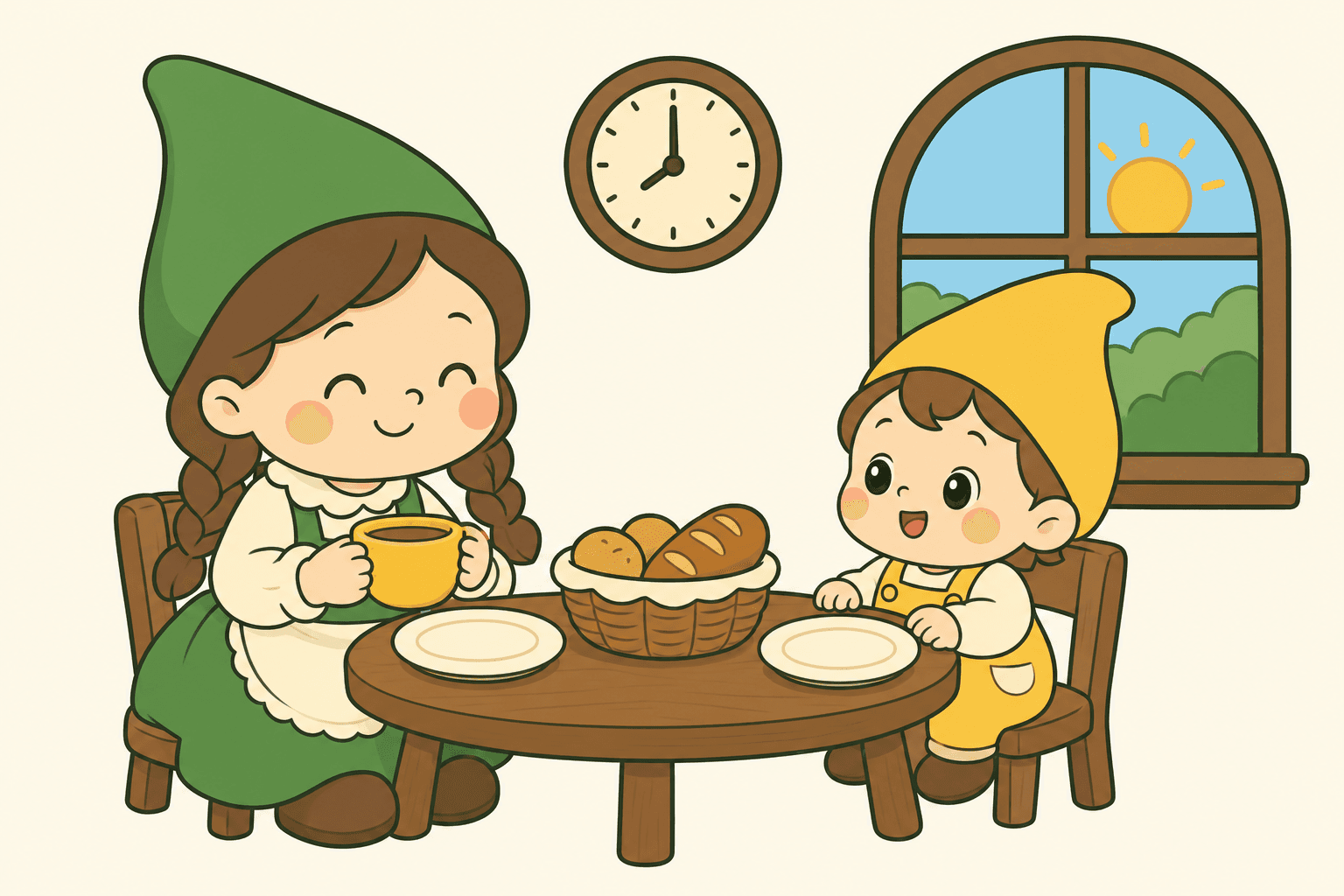
Always offer two options: „Möchtest du Brot mit Käse oder mit Marmelade?“ Both answers are German — and your child has to answer to get what they want.
3. The weather look
One sentence at the window, the same routine every morning: „Schau mal raus. Was für ein Wetter haben wir heute?“ Rain, sun, wind, clouds — a tiny vocabulary that repeats daily.
Out and about
4. The buggy naming game
On the way to daycare, name what you see out loud: „Ein Bus! Ein großer roter Bus.“ For older ones: „Ich sehe was, was du nicht siehst, und das ist grün.“
5. The shopping list in your head
Three things your child has to remember and find in the shop — in German. „Wir brauchen Milch, Äpfel und Brot. Was war das Erste?“
6. The walk-home report
Instead of „War es schön?“, ask something that requires a sentence: „Wen hast du heute zum Lachen gebracht?“ or „Was hat heute am besten geschmeckt?“
Evenings
7. The washing countdown
Body parts in a fixed order: „Erst waschen wir den Bauch. Dann den linken Arm. Und jetzt — das rechte Bein!“ Bath time is ideal because it runs the same way every evening.
8. The dinner table with one rule
A single fixed rule: German is spoken at the table — including by the non-German-speaking parent, at least a few phrases. This is the single most effective lever on your input share.
9. Three things from the day
Before bed, everyone shares three things from their day. Short, reliable, and it scales for years — at some point your child starts volunteering more.
10. Always the same goodnight song
One single song, every evening. Melody carries language better than any repetition drill, and children sing lyrics long before they could explain them.
Start with two, not ten
The most common mistake is introducing everything at once. After four days nothing is left. Pick two moments that happen most reliably in your family — usually breakfast and bedtime — and do only those, for two weeks. The third one then arrives almost by itself.
What that means for your input share is in How much German does my child actually need? And these rituals — with ready-made phrases and audio — are exactly what Wortbeet hands you each day.